A phrase which has always stayed with me since I first heard it “there should be no waiver, on aroma and flavour”. We all have these wee sayings, which worm a way into our brains. Then for some reason or other, just sticks. Maybe, it’s because something subconsciously resonated, but it then takes a minute for our conscious brain to catch up.
Happened to me with this particular saying, which I can thank an old friend for. It came about over a few drinks…you know the conversations when you’re trying to put the world to rights. In our case we were discussing the commoditisation of brewing and fermenting for all types of alcohol. We’d managed to steal the pub’s prime spot, in the nook. Where we chatted about beers, ciders and the production of base alcohols that are used for whisky production.

Big Isn’t Always Better
One subject we’ve always agreed upon came up again for the umpteenth time that day. It was the subject of how large-scale commercial brewing and distilling is typically driven hard from a cost saving perspective. With an inevitable loss in quality, and “soul” in the final product. So let me try and define what I describe as “soul” in a product.
One can have two beers in identical glasses. They can be the same colour, have the same amount of foam or head and additionally the same carbonation (bubbles). However, when you come to sample (smell and taste). One of the beers can have noticeably less flavour and aroma, due to the way it’s been produced
This can be true for beer, cider, base alcohols for whisky production and a whole host of other beverages. Food too as I’m sure everyone has their favourite restaurant for exactly this reason.
The next day when I went back to work, it was brewing day. I remembered that line, “There should be no waiver on aroma and flavour” and it became one of my mantras in brewing.

Skip to the Present Day
I joined the Nine Rivers Distillery (9RD) team last December and get asked fairly often, what I’ve been working on. Plus, how I’m going to help the 9RD project deliver on its promise of putting China on the world whisky map. There’s a curiosity from my network and people in the drinks industry, why a brewer is part of a single malt whisky distillery project.
I’m building on the very conversation discussed above. Using my experience as a brewing professional to ensure Nine Rivers Distillery delivers on its founding principles of being driven by the quality of the final product – which starts at the very beginning of the whisky crafting process. It starts with grains, malting, milling, mashing and fermenting – which is exactly where we start in brewing!
This is in contrast to the approach that seems to dominate the whisky industry. Creating whiskies driven by the numbers on a spreadsheet. Costs being the apparent enemy to most modern whisky.
It’s the main reason I’m part of this journey. I’ve always strived to deliver in aroma and flavour in beers. Now to be given the opportunity to do the same with single malt whisky in China in a project that is not only talking the talk, but walking the walk (as demonstrated by the appointment of absolute legends in the whisky industry, such as Stuart MacPherson).

What’s To Come? No Waiver, On Aroma and Flavour
I will be putting together a series of articles over the next few months that will outline how we will approach the pre-distillation processes involved in crafting of single malt whisky. How Nine Rivers Distillery will differentiate itself from the global whisky industry by putting quality before costs.
We’ll not re-invent the wheel, nor ever claim to do so. There are so many great people in this industry, who’ve done amazing work. They’ve taken ideas, explored them as well as shared some of their findings. We’ll just be looking at doing all it, together, as the foundation to creating better whisky.
Barley and Grains
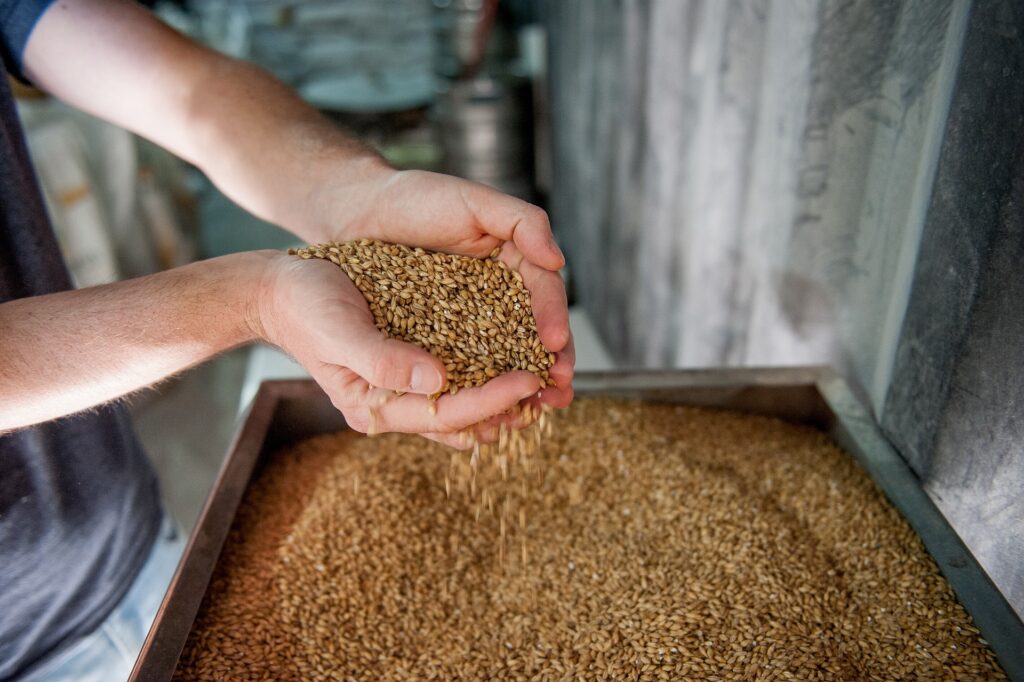
I come from a brewing background so I know barley well. Barley plays a massive role in the crafting of whisky. Both as single malt, and as single grains or blends. Malted barley is critical in some amount for all whiskies. It creates the enzymes used for converting starches to sugars that are then used to feed yeasts that create alcohol.
What most people don’t realise is that there are around 5,500 types of barley. However, not all are used for making alcohol. Even less are used in whisky production. In fact there are only around a dozen types of barley that are used in the whisky industry. It’s no coincidence that these are the most cost effective types of barley as opposed to the types that could give the best aromas and flavours. Commercial distillers need the highest yeilds possible – more litres of alcohol per ton of grain, in the shortest time possible.
The Costs and Quality Debate – No Waiver, On Aroma and Flavour
Whisky is big business, with Statista stating revenue in the industry will amount to US$88.07bn in 2023. The market is expected to grow annually by 5.18% (CAGR 2023-2027). A very small number of multi-billion-dollar corporations dominate whisky production – all with shareholders to appease with dividends derived from profits.
Coming from a brewing background I know many of the big breweries, and I know first hand that they work to costing a product first, and then they build a recipe around this number.
If you are selling tens of million of bottles of beer per year and you have an opportunity to save just 1% on the manufacturing, then the addition to the bottom line is substantial. The same principles apply in whisky production too. It’s often the same companies who own both the big beer and whisky brands, seen on supermarket shelves.
It’s All About the Grains
As a brewer, grains are my starting point. A lot of brewers concentrate on differentiation through hops. Of course, hops are important, but grains are the “soul” of a beer. Hops are (in my opinion) more like the seasoning. No amount of salt and pepper can make a cheap steak taste as good as a prime cut of wagyu. No amount of fancy hops can make a good beer out of something made from substandard grains or an inferior mash
Topics I Plan to Cover in Coming Articles
Barley and grain terroir – How and where the grains are grown can affect the sensory of a whisky
The revival of heritage grains – How European barleys are being revived and bringing back flavours many thought were lost.
The use of specialist malts – Looking at specialties like roasted malts used in brewing, and how they can impact the final whisky.
Non-Traditional Whisky Grains – There’s whisky being made all over the globe. Not all distilleries use grains typically associated with whisky production. We plan to explore this topic on your behalf, and share our findings with you.
Yeasts – how we will be collecting and developing natural yeast strains from our local environment and integrating these into our fermentation to help create a unique “Longyan, Fujian” whisky.
No Waiver, On Aroma and Flavour – That’s Your Lot Folks!
“There should be no waiver, on aroma and flavour” is a mantra I live by. It’s one I ’Il continue using during my Nine Rivers Distillery journey. The ethos of the project is to make quality product at any cost, while still offering good value to whisky lovers resonates with me and I’ll ensure that everything pre-distillation will deliver.
Would You Like To Read More?
If you enjoyed reading this, and you would like to catch up with some of our past articles, then please CLICK HERE and go to our News Section, where most of our other content is published.
Follow Us
If you have enjoyed reading this and want to learn more about Nine Rivers Distillery then choose from the links below – or use the QR code to follow us on WeChat.
LinkedIn users you can CLICK HERE to follow us.
Facebook users, you can CLICK HERE.
YouTube users, you can CLICK HERE.
Twitter users, you can CLICK HERE.
Instagram users, you can CLICK HERE.